One of the most memorable articles I ever read was in the New York Times, about information cascades, specifically about the value of low-fat diets. The TLDR on the article and the concept is that the case for low-fat diets was never actually proved, but once people get hold of a belief, it can become accepted as a fact. A lie can get halfway around the world, the old adage goes, before the truth can put its pants on.
The current information cascade that journalists are glomming onto is college closings. And the prediction is terrible, horrible, and bad. Or so it seems.
As I wrote on my Higher Ed Data Stories Blog, it’s important to understand what we mean by “a college.” For many people, it’s just those four-year institutions that are public or private, not-for-profit. That, of course, excludes community colleges. And it excludes for-profits. But a definition is always an important place to start the discussion. Don’t say, “colleges” unless you define what a college is.
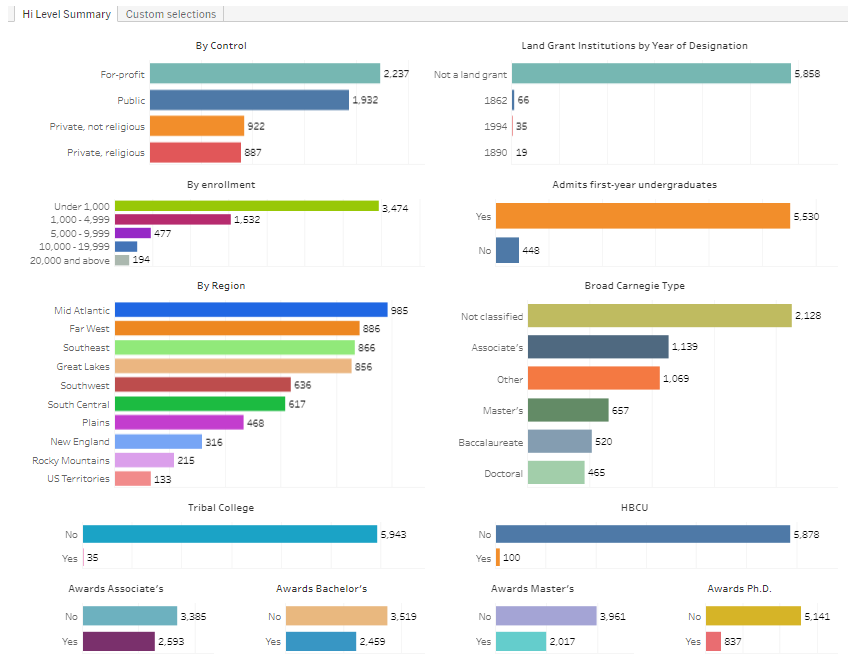
The press, which often thinks “college” only refers to 50 brand-name, highly rejective colleges, nonetheless loves to expand that definition when they talk about closings. But even if you clearly define “college,” you have to define “closing.” Do you mean the institution? Or do you mean branch campuses? Do you mean net closings, or gross closings? Define your terms.
There is a lot of crap out there, and I’m not sure if it’s intended to drum up business, or to scare people; or perhaps it’s just that too many people settle for easy data and statistics, especially if it makes for an interesting story.
The last, in my opinion, in the worst. Take a look at these examples:
First, an article titled, “Why is the higher education sector so fragile in the US?” in Higher Ed Dive. The author is a “consolidation expert” who cites this interesting tidbit:
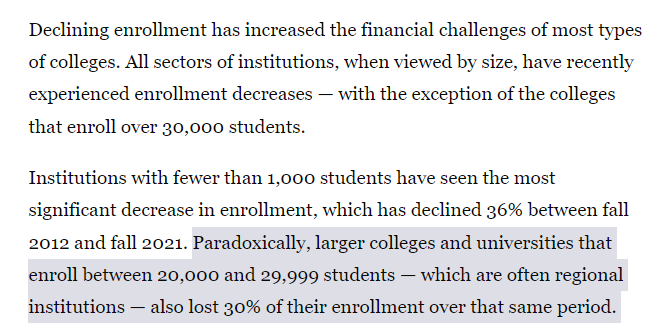
Wow. That’s pretty amazing. Is it true? In the simplest terms possible, no. Let’s take a look at total enrollment from IPEDS (if the author has another definition I’ll be happy to re-run it):
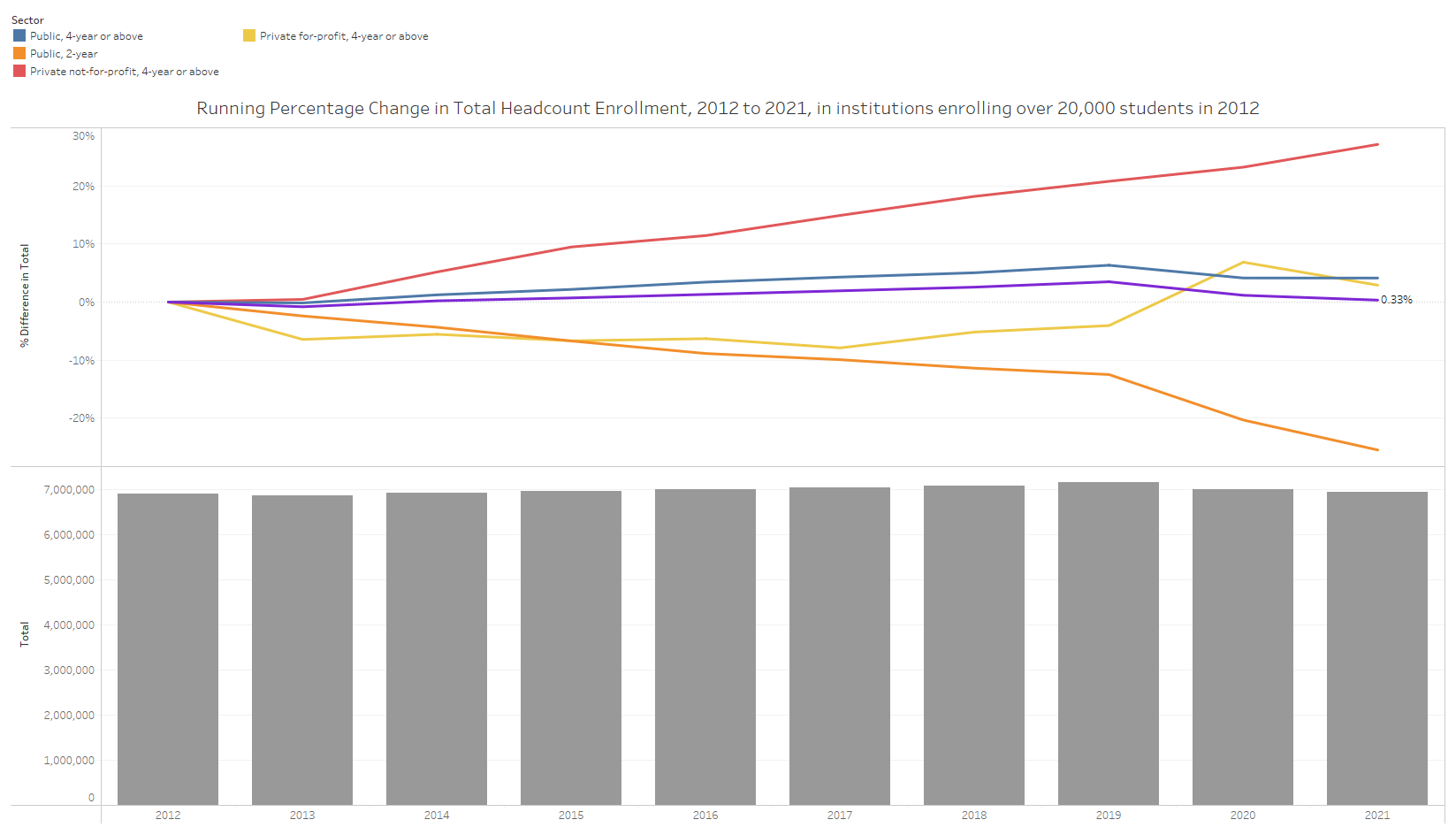
The total enrollment in these institutions increased over that time (albeit slightly), but all sectors other than community colleges increased more than that.
The Wall Street Journal, of course, always ready to celebrate the demise of any industry that doesn’t run on a McKinsey or Bain model, suggests doom and gloom ahead, if you believe it’s not already here, with this dire full-column bleed. We have a “surge” in college closings:
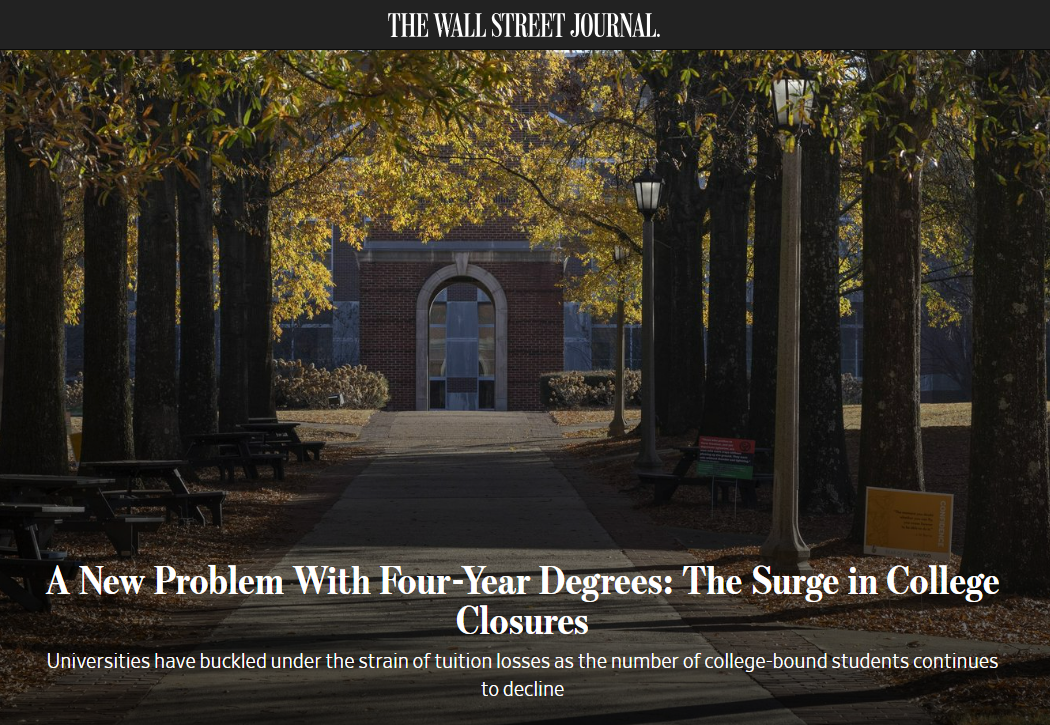
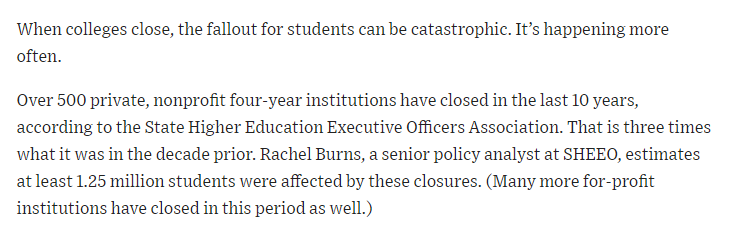
Supporting this outlook is this interesting statistic in the article:
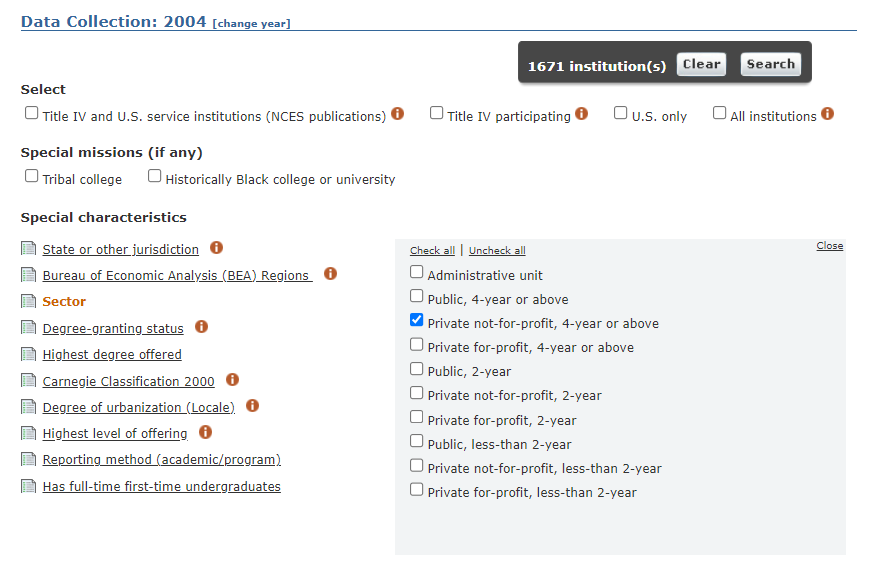
I have an email into SHEEO asking for this report or better yet, a list of the 500 schools, as my web search has been unsuccessful in turning it up. But I did go off to IPEDS to see if there is any chance this is true, as it seemed a bit off to me. Here’s what I found. In 2004, there were 1,671 such institutions.
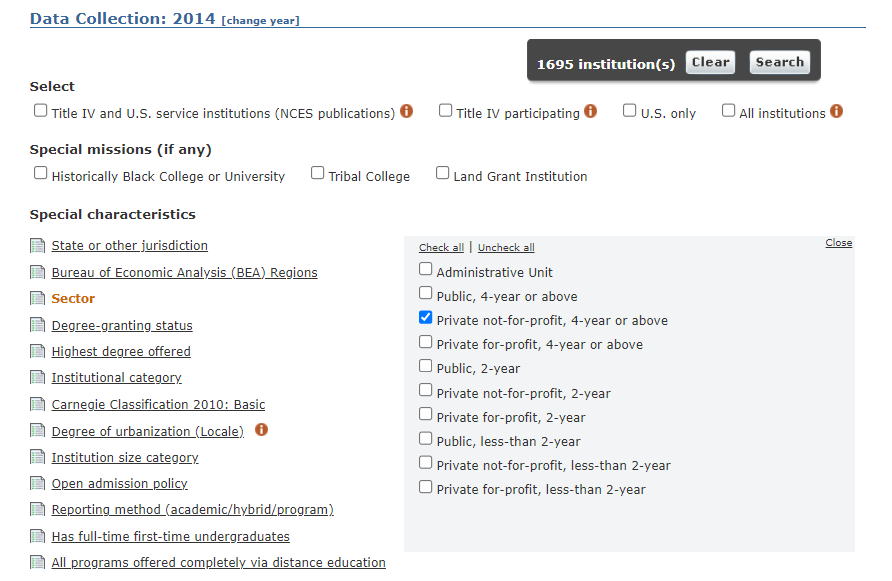
In 2014, there were 1,695.
In 2022, the most recent year available, there were 1,656.
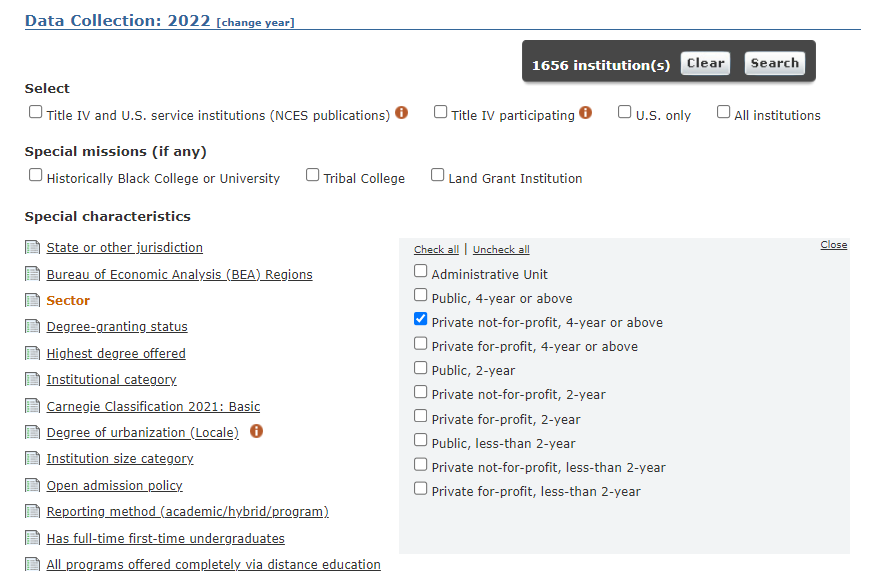
I do not believe we have seen 500 closings in the last two years, but if I am wrong, I will be happy to correct this post.
I chose 2024 as my base because I also found this tidbit from a SHEEO presentation online.
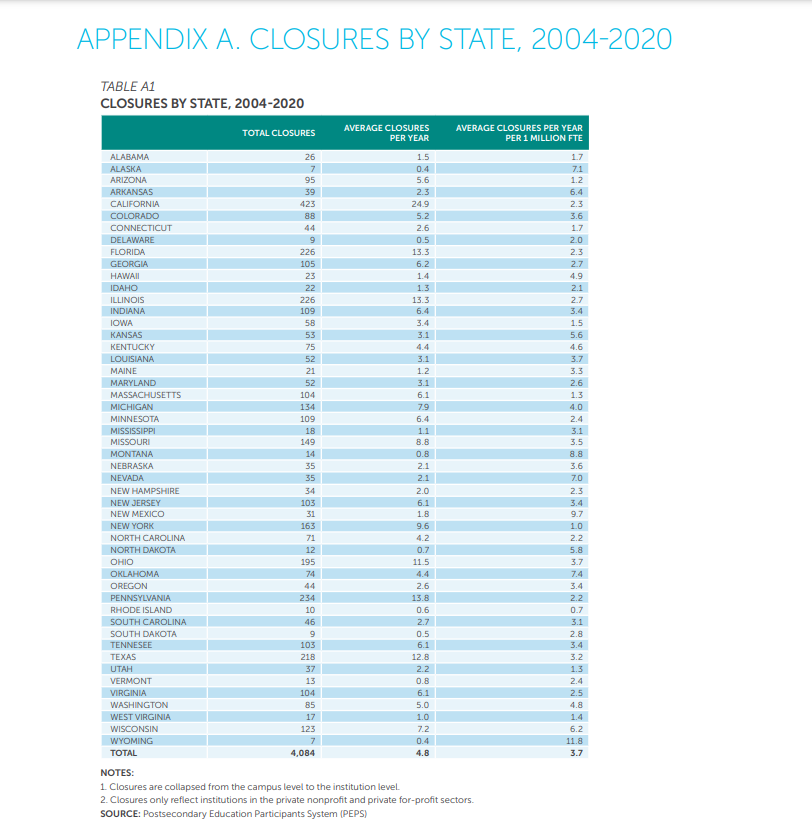
Going back to IPEDS in 2004, you get this:
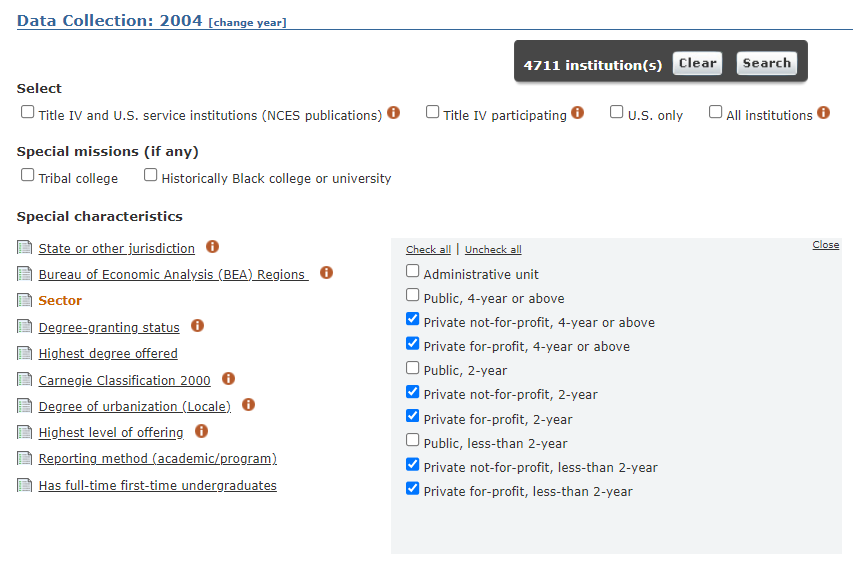
And this:
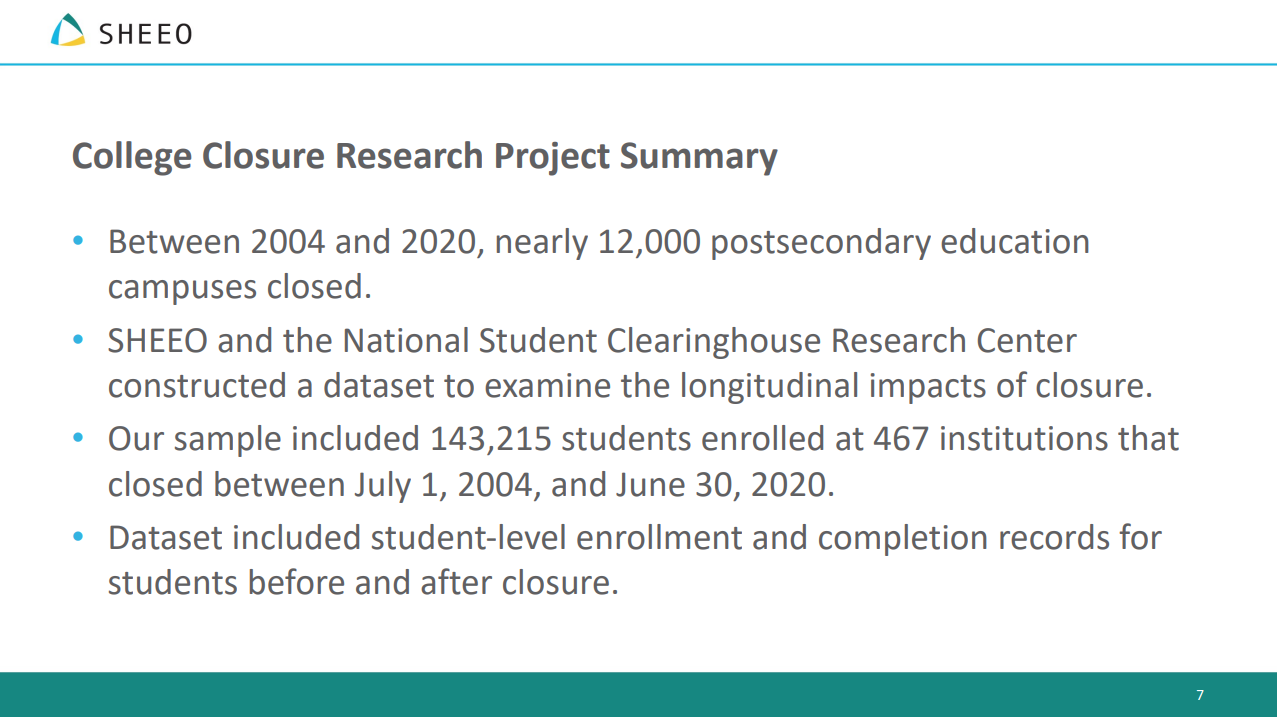
This appears to be a case of campus closings, not institutional closings. And most of those campus closings are at for-profit institutions, many of whom were simply renting storefront space in strip malls in large metro areas. This in no way, of course, diminishes the effect on the students who end up on the short end of the stick, but when an article gives and impression, and some detailed understanding of what’s going on is necessary to put things in context, that context should be provided.
And by no means am I suggesting that traditional, private, not-for-profit colleges are not closing. They are, and as the Higher Ed Dive article rightly points out, very small institutions are most vulnerable, for the most part.
But if we’re going to have a real discussion about this important topic, get the facts straight, or at least provide context. Otherwise, it can add heat without light, and it can cause people to jump on the information cascade and spread bad information.
 Jon Boeckenstedt's Admissions Weblog
Thanks, Jon.
LikeLike